Are you ready to transform your kitchen without a full remodel? Installing laminate around your kitchen cabinets is a smart and affordable way to give your space a fresh, modern look.
You might think this task is complicated, but with the right steps, you can do it yourself and save money. You’ll discover simple tips and tricks that make the process smooth and stress-free. Keep reading to learn how you can easily upgrade your kitchen and enjoy a stylish, durable finish that lasts.
Preparing The Kitchen Floor
Preparing the kitchen floor is a crucial first step before installing laminate around cabinets. A clean, level surface ensures the laminate fits well and lasts longer. Taking time to prepare can prevent problems later.
Clearing The Area
Remove all furniture and appliances from the kitchen floor. Take out rugs and mats. This clears space and avoids damage to your laminate. Check corners and under cabinets for small items. A clear area helps you work easily and safely.
Cleaning And Leveling The Surface
Sweep and vacuum the floor to remove dirt and dust. Clean sticky spots with a damp cloth and mild soap. Let the floor dry completely. Check for bumps or uneven spots. Use a floor leveling compound if needed. A flat surface makes the laminate lay smoothly.
Gathering Essential Tools And Materials
Collect all necessary tools before starting. You will need a tape measure, utility knife, spacers, and a tapping block. Have your laminate planks and underlayment ready. Keep a pencil and straight edge nearby. Being prepared saves time and avoids interruptions.
Measuring And Planning Layout
Measuring and planning the layout is the first step in installing laminate around kitchen cabinets. Accurate measurements help avoid mistakes and wasted material. A clear plan makes the installation smoother and faster. Each step should be done carefully to fit the laminate perfectly.
Taking Accurate Measurements
Measure the entire floor area around the cabinets. Use a tape measure and note down the length and width in feet or inches. Measure from wall to wall and from cabinet edges to walls. Double-check all measurements for accuracy. Record the measurements on paper for easy reference during installation.
Planning The Laminate Pattern
Decide how the laminate will run in the kitchen. You can lay planks parallel or perpendicular to the cabinets. Choose a pattern that looks balanced and hides seams well. Consider the direction of light and the room shape. Planning the pattern helps create a neat and attractive floor.
Marking Cut Lines Around Cabinets
Mark the laminate planks where they need to be cut to fit around cabinets. Use a pencil and ruler to draw clear cut lines on the laminate. Cut carefully to avoid gaps or overlaps near the cabinet edges. Make sure all cuts allow the laminate to fit snugly without forcing it in.
Cutting Laminate For Cabinet Fit
Cutting laminate to fit around kitchen cabinets requires accuracy and care. Proper cutting ensures a seamless look and tight fit. This step is crucial for a professional finish. Understanding the right tools and techniques helps avoid mistakes and waste.
Using The Right Cutting Tools
Choose tools designed for laminate cutting. A jigsaw with a fine-tooth blade works well. A circular saw with a laminate blade offers straight, clean cuts. Always wear safety goggles and gloves. Sharp blades reduce chipping and splintering.
Making Precise Cuts
Measure twice, cut once. Mark the laminate clearly with a pencil or marker. Use a straight edge to guide your cuts. Cut slowly to avoid mistakes. Check the fit often during the process. Small adjustments can improve the final look.
Handling Obstacles And Corners
Cabinets often have pipes or uneven edges. Measure around obstacles carefully. Use a coping saw for tight corners. Score the laminate surface before cutting to reduce splinters. Fit the laminate in place and trim as needed. Patience results in a clean finish.
Installing Laminate Around Cabinets
Installing laminate around kitchen cabinets requires care and precision. This task creates a clean, professional look. Proper steps prevent gaps and damage later. Follow simple tips to make your floor look perfect near cabinets.
Starting Installation Near Cabinets
Begin by measuring the space between cabinets. Cut laminate planks to fit tight around cabinet edges. Use a jigsaw or handsaw for curved cuts. Lay the first plank along the cabinet base. Ensure it sits flat without lifting or gaps.
Maintaining Expansion Gaps
Leave a small gap between laminate and cabinets. This gap allows the floor to expand and contract. Typically, a 1/4-inch space works well. Use spacers to keep this gap consistent. Cover the gap later with molding or trim.
Securing Laminate Planks Properly
Snap planks firmly into place to lock joints. Avoid forcing planks under cabinets, which may damage them. Use a tapping block to secure tight seams. Check that no plank moves or lifts. Properly fixed planks create a smooth, stable floor.
Finishing Touches
Finishing touches make your laminate floor look complete and polished. These final steps protect your work and improve the kitchen’s overall appearance. Taking time for details ensures a smooth, clean, and durable finish around kitchen cabinets.
Installing Baseboards And Moldings
Baseboards cover the gap between the floor and walls or cabinets. They hide uneven edges and give a neat look. Choose moldings that match your laminate style and color. Nail or glue them carefully, keeping joints tight and straight. This step adds a professional feel to your kitchen floor.
Sealing Gaps And Edges
Small gaps may appear between laminate planks and cabinets. Seal these with a flexible caulk that matches the floor color. This stops dirt and moisture from entering. Use a caulking gun for smooth lines and wipe away excess quickly. Proper sealing protects the floor and cabinet bases from damage.
Cleaning And Inspecting The Floor
Clear dust and debris from the new floor with a soft broom or vacuum. Avoid wet mops until the floor fully sets. Check for loose planks or uneven areas. Tighten or adjust any spots that need fixing. A clean, even surface improves durability and keeps your kitchen safe to walk on.
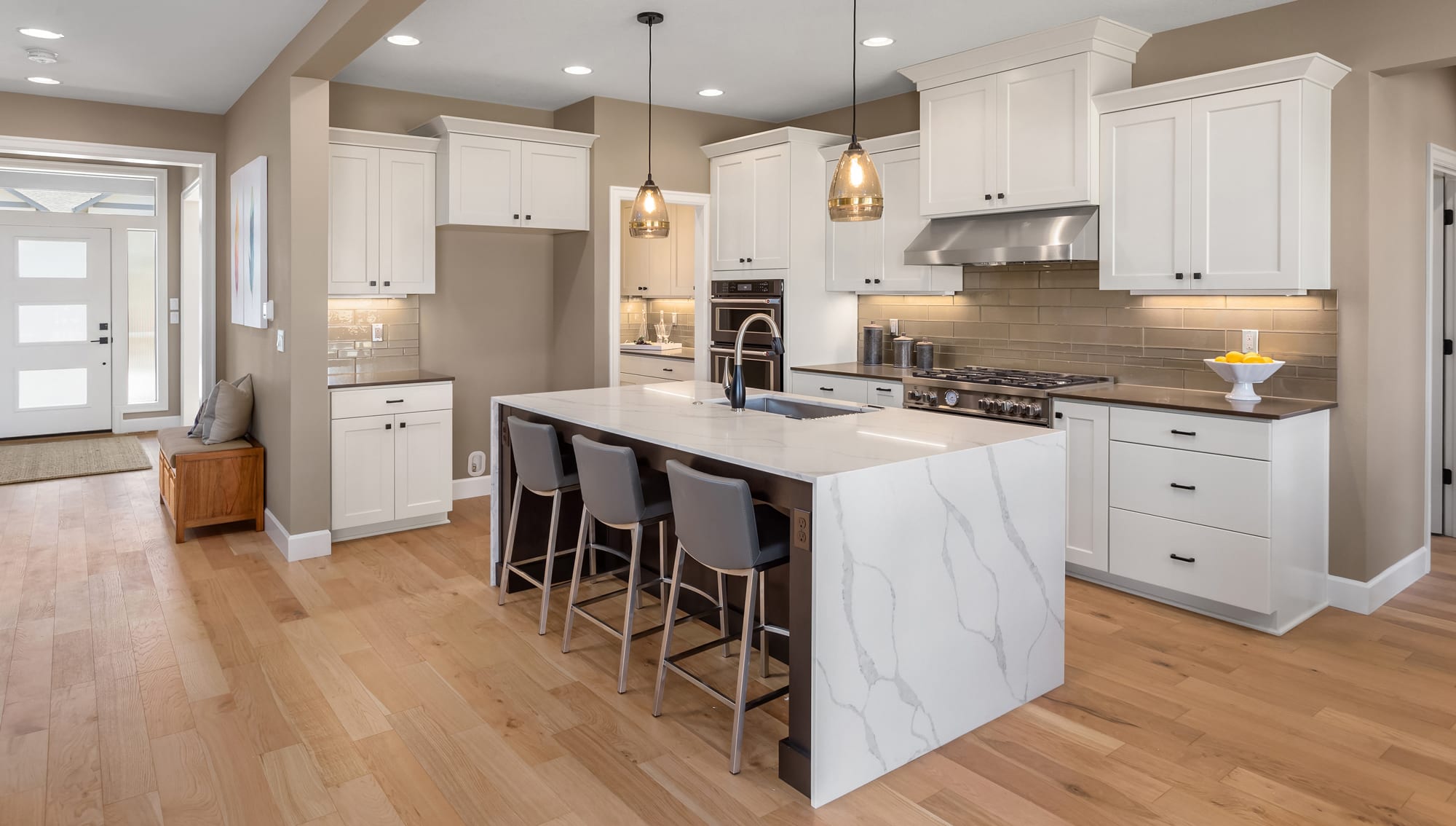
Credit: www.kaceyscarpet.com
Common Mistakes To Avoid
Installing laminate around kitchen cabinets requires care and attention. Many beginners make simple mistakes that cause problems later. Avoiding these errors helps the floor last longer and look better. Here are common mistakes to watch out for during installation.
Ignoring Floor Leveling
Laminate flooring must lie flat to avoid gaps and uneven surfaces. A floor that is not level can cause the laminate to bend or crack. Always check the floor for bumps or dips before installation. Use a leveling compound if needed to create a smooth base. Skipping this step leads to poor results and costly repairs.
Skipping Expansion Gaps
Laminate expands and contracts with temperature and humidity changes. Without expansion gaps, the floor can buckle or warp. Leave small gaps between the laminate and cabinets or walls. Use spacers to keep these gaps even around the room. Cover gaps later with molding or trim for a neat finish.
Rushing The Cutting Process
Cutting laminate pieces too fast causes mistakes and wasted material. Measure twice and cut once. Take time to cut pieces accurately around cabinets and corners. Use proper tools like a laminate cutter or fine saw blade. Slow and steady cuts give clean edges and a professional look.
Tips For Long-lasting Laminate Floors
Installing laminate floors around kitchen cabinets can create a clean, stylish look. To keep these floors looking new, follow simple tips that help them last longer. Proper care protects your investment and maintains beauty over time.
Regular Maintenance Practices
Sweep or vacuum often to remove dirt and dust. Dirt can scratch laminate surfaces. Use a soft broom or vacuum without a beater bar. Wipe spills quickly to stop stains and damage. Place mats at entrances to catch debris. Check floors regularly for scratches or damage.
Protecting Against Moisture
Water harms laminate floors. Avoid standing water near cabinets. Clean up spills immediately. Use rugs or mats near sinks and dishwashers. Keep humidity levels low in the kitchen. Use a dehumidifier if needed. Seal edges near cabinets to prevent moisture entry.
Using Proper Cleaning Products
Choose cleaners made for laminate floors. Avoid wax, polish, or abrasive products. Use a damp mop with mild soap or a laminate cleaner. Do not soak the floor. Dry floors after cleaning to prevent water damage. Test new cleaners on a small area first.

Credit: www.bestlaminate.com

Credit: www.youtube.com
Frequently Asked Questions
How Do I Prepare The Floor Before Installing Laminate?
Clean the floor well and remove any old flooring or debris. Make sure the surface is flat and dry for best results. Use a leveling compound if there are bumps or holes.
Can I Install Laminate Under Kitchen Cabinets?
It is best to install laminate flooring up to the cabinets, not under them. This allows easier cabinet replacement later and avoids damage to the laminate edges.
What Tools Do I Need To Install Laminate Around Cabinets?
You will need a tape measure, saw, spacers, tapping block, pull bar, and underlayment. A pencil and utility knife also help with precise cuts around cabinets.
How Do I Cut Laminate To Fit Around Cabinets?
Measure carefully and mark the laminate where cuts are needed. Use a jigsaw or laminate cutter to make clean, accurate cuts that fit tightly around cabinet edges.
Final Words
Installing laminate around kitchen cabinets adds style and protects your floors. Take your time measuring and cutting for a perfect fit. Use the right tools to make the job easier and cleaner. Small gaps can be filled with matching trim or caulk.
Clean the surface well before starting to ensure strong adhesion. The result will look neat and last for years. Enjoy your refreshed kitchen space with durable, beautiful flooring. Simple steps lead to great results. Ready to start your project?