Thinking about giving your home a fresh new look? Installing laminate flooring might be the easiest and most affordable way to do it.
You don’t need to be a pro or spend a fortune to get that beautiful, polished floor you’ve always wanted. In this guide, you’ll discover simple, step-by-step instructions that anyone can follow. By the end, you’ll feel confident transforming your space with a floor that looks great and lasts long.
Ready to get started? Let’s dive in and make your flooring project a success!
Credit: resources.rwsupply.com
Preparing The Room
Preparing the room is a key step before installing laminate flooring. It helps create a smooth surface and avoids problems later. Taking time to prepare the space makes the installation faster and easier.
Clearing The Space
Remove all furniture and items from the room. Clear away rugs, curtains, and decorations. Make sure the floor is empty and clean. This gives you enough room to work safely and comfortably.
Checking The Subfloor
Inspect the subfloor for damage or uneven spots. Fix any cracks, holes, or bumps you find. The subfloor must be dry, flat, and sturdy. A good base helps the laminate last longer and look better.
Gathering Tools And Materials
Collect all tools and materials before starting. You will need a tape measure, saw, spacers, and underlayment. Have the laminate planks ready to go. Being prepared saves time and avoids interruptions.
Acclimating The Flooring
Acclimating laminate flooring is a key step before installation. It helps the boards adjust to the room’s temperature and humidity. This prevents problems like warping or gaps after installation. Take time to let the flooring settle in the space where it will be installed. Proper acclimation ensures a smooth, long-lasting floor.
Why Acclimation Matters
Laminate floors expand and contract with temperature changes. Without acclimation, boards may swell or shrink later. This causes buckling or gaps in the floor. The flooring must match the room’s conditions for stability. Acclimation helps avoid costly repairs and keeps the floor looking good.
How Long To Acclimate
Place the flooring in the room for at least 48 hours. Keep the boxes unopened but open the room’s windows and doors. The temperature should stay between 60 and 80 degrees Fahrenheit. Humidity should be around 40 to 60 percent. Longer acclimation may be needed in extreme climates or large spaces.
Laying The Underlayment
Laying the underlayment is a key step in installing laminate flooring. It creates a smooth base and helps protect your floor. The right underlayment reduces noise and absorbs moisture. It also makes the floor feel softer underfoot. Taking time to lay it correctly will improve the floor’s durability and comfort.
Choosing The Right Underlayment
Select an underlayment that fits your subfloor type. Foam underlayment works well on wood floors. For concrete subfloors, use a moisture barrier underlayment. Some underlayments offer extra soundproofing. Check the product details before buying. Choose a thickness that matches your laminate flooring. The wrong underlayment can cause creaks or damage.
Installation Tips
Start by cleaning the subfloor thoroughly. Remove dust, dirt, and any bumps. Roll out the underlayment in the same direction as the flooring. Keep the edges tight but do not overlap them. Use tape designed for underlayment seams. Cut pieces neatly around corners and door frames. Allow the underlayment to lay flat without wrinkles. Avoid walking on it too much during installation.

Credit: merrimackvalleymarealestate.com
Planning The Layout
Planning the layout is a key step before installing laminate flooring. It sets the foundation for a smooth and attractive result. Proper planning saves time and reduces waste during installation. Focus on measuring, choosing the start point, and arranging planks for a natural look.
Measuring The Room
Measure the length and width of the room carefully. Use a tape measure and note down the numbers. Calculate the total square footage by multiplying length by width. Add 10% extra for cutting and mistakes. Accurate measurements ensure you buy enough laminate flooring.
Deciding Starting Point
Start near the longest, straightest wall. This helps keep planks aligned and neat. Avoid starting near doorways or uneven walls. Check the natural light direction to decide the plank direction. Laying planks parallel to windows highlights the flooring’s texture and color.
Staggering The Planks
Stagger plank ends by at least 12 inches. This creates a strong, stable floor that looks natural. Avoid lining up plank seams in the same row. Use leftover pieces to start new rows. Staggering prevents weak spots and improves the floor’s appearance.
Installing The Laminate
Installing laminate flooring is a straightforward process that anyone can do with the right tools. The key is to follow each step carefully to ensure the floor looks great and lasts long.
This section explains how to install the laminate, focusing on the click-lock system, cutting planks, and fitting around obstacles.
Click-lock System Basics
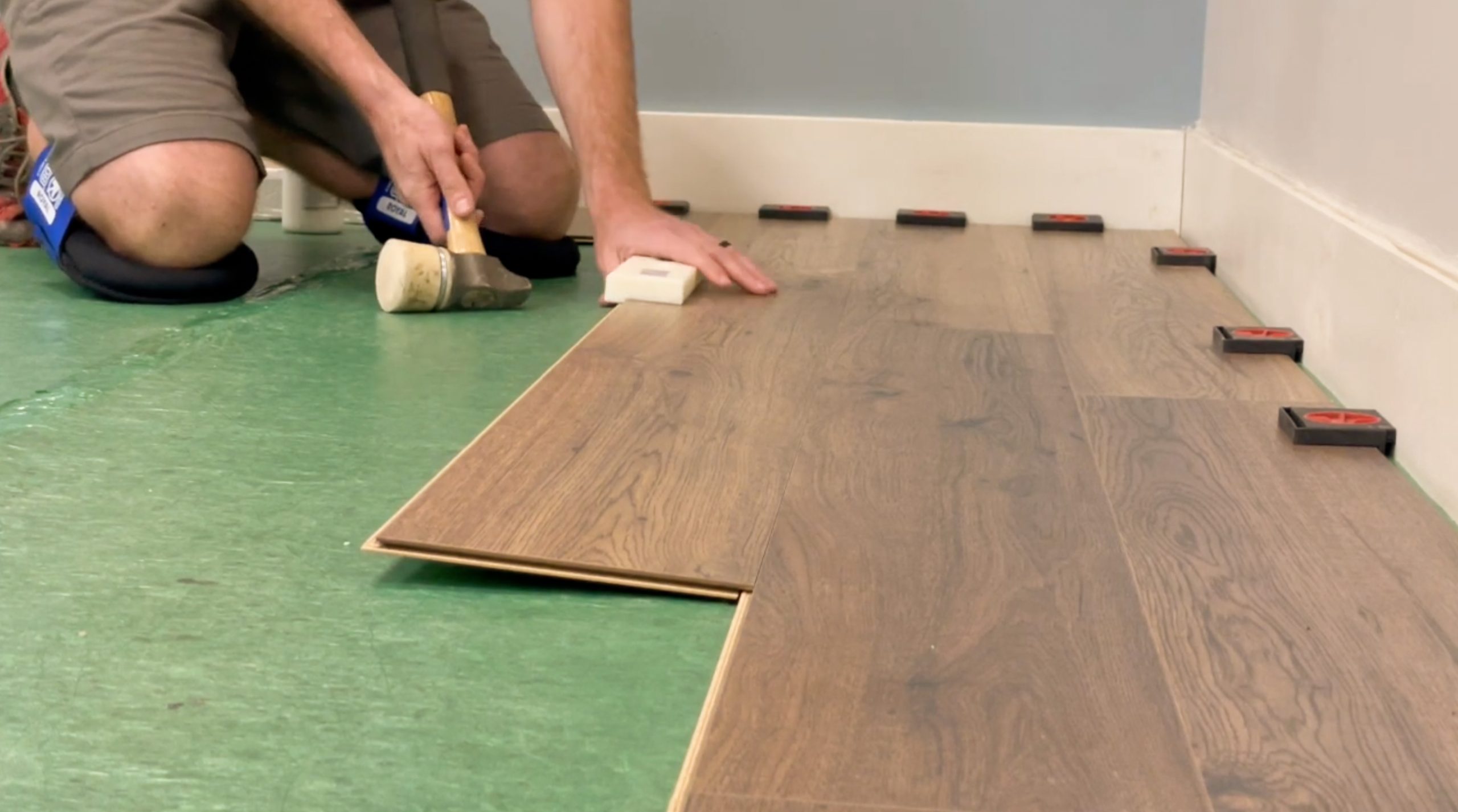
The click-lock system lets planks snap together without glue or nails. Each plank has a tongue on one side and a groove on the other. You angle the plank and press it down to lock it with the previous one. This system makes installation faster and cleaner.
Cutting Planks To Fit
Measure the space where the plank will go. Mark the plank with a pencil and use a saw to cut it. Always cut the plank a little smaller than the space for expansion gaps. Smooth rough edges with sandpaper for a neat finish.
Installing The First Row
Start by placing spacers along the wall to keep a small gap. Lay the first plank with the tongue side facing the wall. Connect each plank by clicking the edges together. Make sure the row is straight and tight.
Continuing Rows
Begin the second row with a plank cut to half length. This staggers the joints for strength and looks better. Click the plank into the previous row, then press down to lock. Keep going, row by row, checking alignment often.
Fitting Around Obstacles
Measure and mark planks to fit around door frames, pipes, or cabinets. Use a jigsaw for curved cuts or small notches. Leave the expansion gap near obstacles to allow floor movement. Fit the planks carefully to keep a clean look.

Credit: www.youtube.com
Finishing Touches
After laying your laminate flooring, the final steps give your room a polished look. These finishing touches protect your floor and enhance its appearance. They also help the floor last longer and keep it looking new.
Installing Baseboards And Molding
Baseboards cover the gap between the floor and the wall. They hide any uneven edges and give a neat finish. Use a nail gun or hammer to fix them in place. Molding adds a decorative element along the edges. Cut pieces to fit corners and edges perfectly. Paint or stain them to match your room’s style.
Cleaning The Floor
Remove all dust and debris from the floor. Use a soft broom or vacuum with a hard floor setting. Wipe the floor with a damp cloth or mop. Avoid using too much water; laminate can swell if wet. Use cleaners designed for laminate floors to keep the surface shiny.
Maintenance Tips
Place felt pads under furniture legs to avoid scratches. Clean spills immediately to prevent stains and damage. Avoid walking on the floor with high heels or cleats. Sweep or vacuum regularly to keep dirt off the floor. Use rugs in high-traffic areas to protect the surface.
Frequently Asked Questions
What Tools Do I Need To Install Laminate Flooring?
You need a tape measure, utility knife, spacers, tapping block, and a rubber mallet. These tools help cut and fit the flooring properly. Having them ready makes the job easier.
How Do I Prepare The Floor Before Installing Laminate?
Clean the floor and remove any old flooring or debris. Make sure the surface is dry, flat, and smooth. This helps the laminate lay evenly and last longer.
Can I Install Laminate Flooring Over Existing Floors?
Yes, laminate can go over some floors like vinyl or tile if they are level. Avoid installing over carpet or uneven surfaces. Proper underlayment is important for best results.
How Much Time Does Laminate Flooring Installation Take?
Installation time depends on room size and skill level. Small rooms may take a few hours; larger areas can take a day. Planning and preparation speed up the process.
Final Words
Installing laminate flooring can be simple and rewarding. Follow each step with care and patience. Measure and prepare your space before starting work. Lay the planks tightly to avoid gaps. Use the right tools to make the job easier. Take breaks and check your progress often.
Soon, your room will have a fresh, clean look. Enjoy the beauty and durability of your new floor. This project can save money and add value to your home. Keep your floor clean and dry to make it last long.
You now have the knowledge to install laminate flooring yourself.